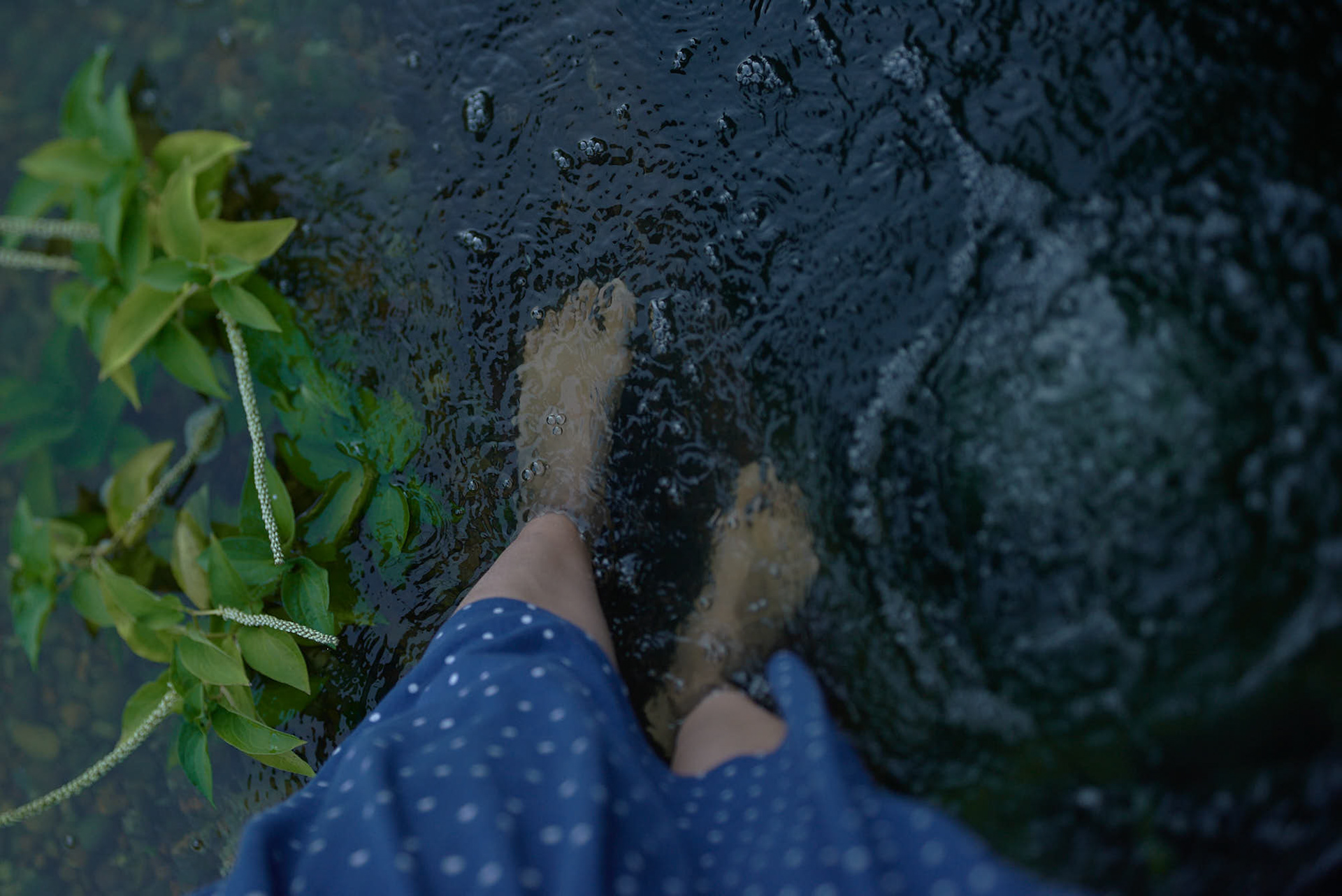
Photo of the Bubble Pond Filtration
The filtration of our pond water is achieved through the combined efforts of pond plants absorbing available nutrients and the circulation of water generated by a small aquarium air pump. The pump consumes very little electricity while moving surprisingly large volumes of water.
Unlike many conventional pumping systems, the water is circulated very gently and, as a result, the filtration is completely wildlife-friendly. It is also affordable, safe and easy to maintain, with no mains electrical cables running close to the water.
Best of all, it can be self-built. Take a look below at how it works, it’s much easier to get your head around it once you see all the elements in place (btw, if you are curious or want to do it yourself, we've used David Pagan-Butler’s tutorial for organic swimming pools as a guide, which we thoroughly recommend.)
How do the pond filtration and rainwater collection work?
Wall Construction
We began by building a permeable sandbag wall with openings at either end to accommodate soil-pipe T-junctions connected to perforated flexible pipes.
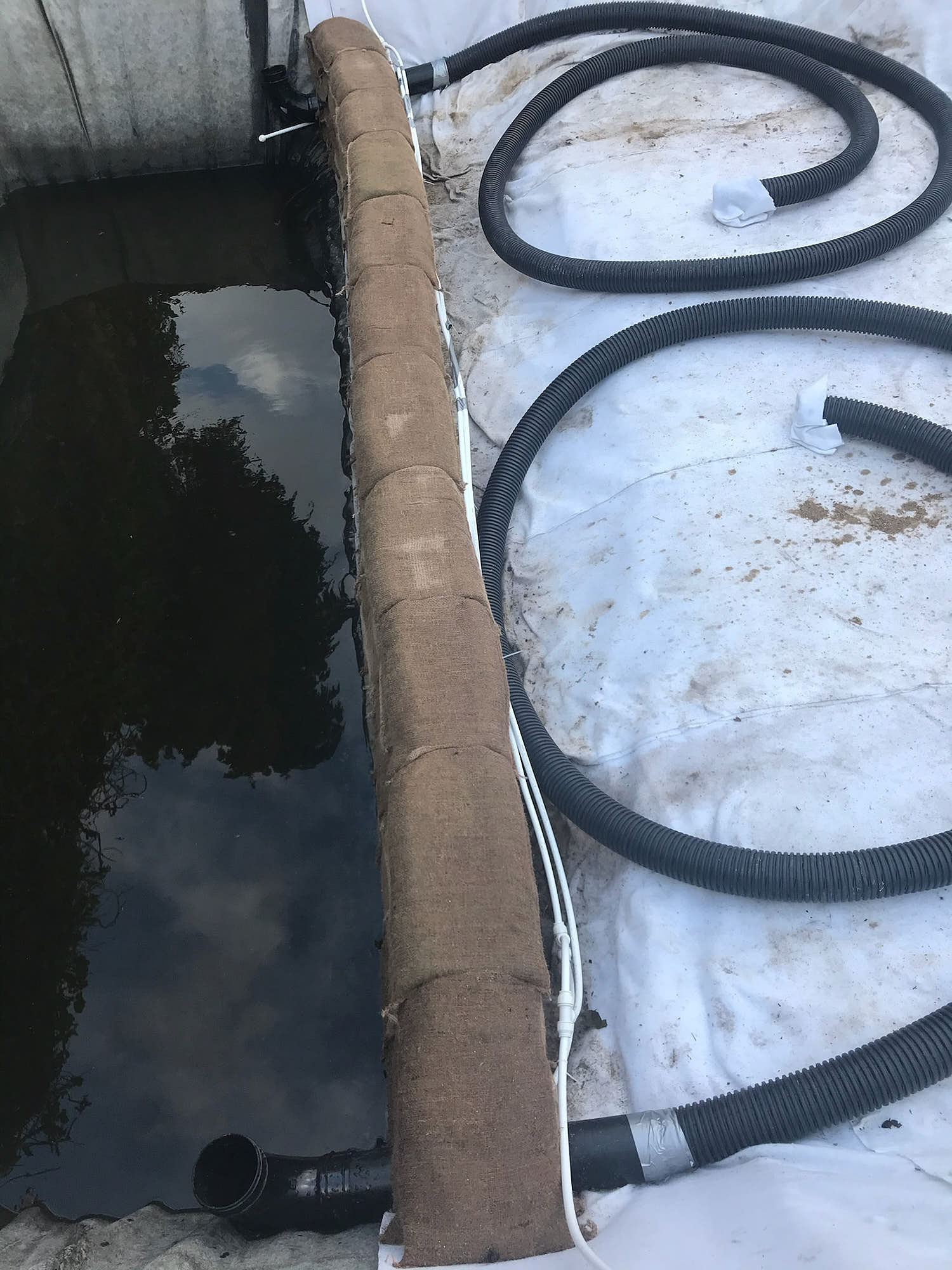
Take a look at both the bottom and top of the photograph, where you can see the soil-pipe T-junctions.
The photograph below shows the wall from another angle, making it easier to see its height and the black perforated flexible pipes connected to the T-junctions.
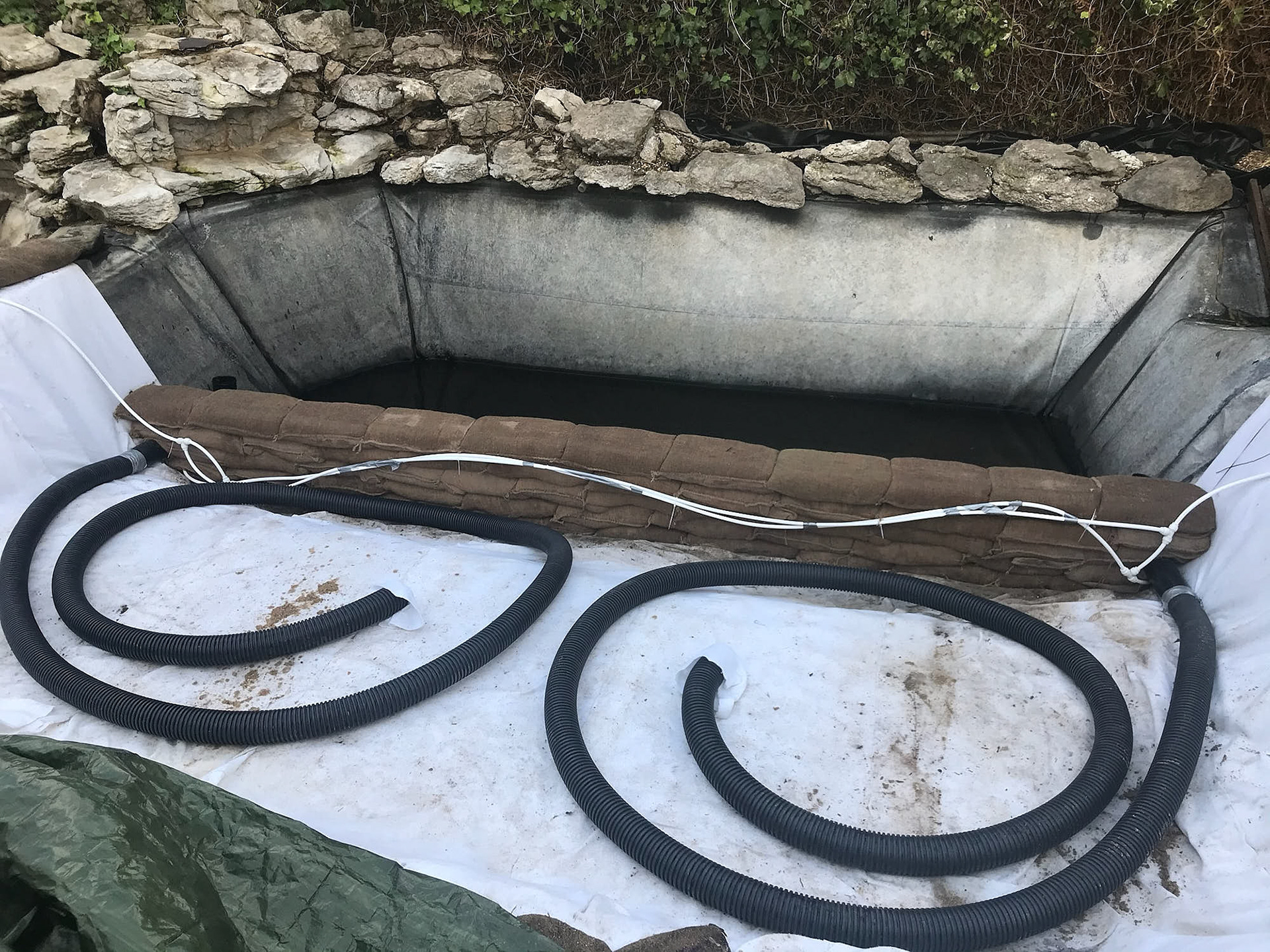
You can also see the smaller white pipes (15 mm in diameter). These connect the aquarium air pump (not shown) to the air stones housed inside the T-junctions. Further photographs below show how the system fits together.
Gravel
The perforated pipes were then covered with gravel - a lot of gravel -, held in place by the sand bag wall, which created a shallow regenerative zone where the plants can grow and most of the filtration takes place.
Beyond it lies the deeper section of the pond, home to the water lilies and a variety of oxygenating plants that arrived entirely of their own accord.
The variation in depth encourages both plant and wildlife diversity.
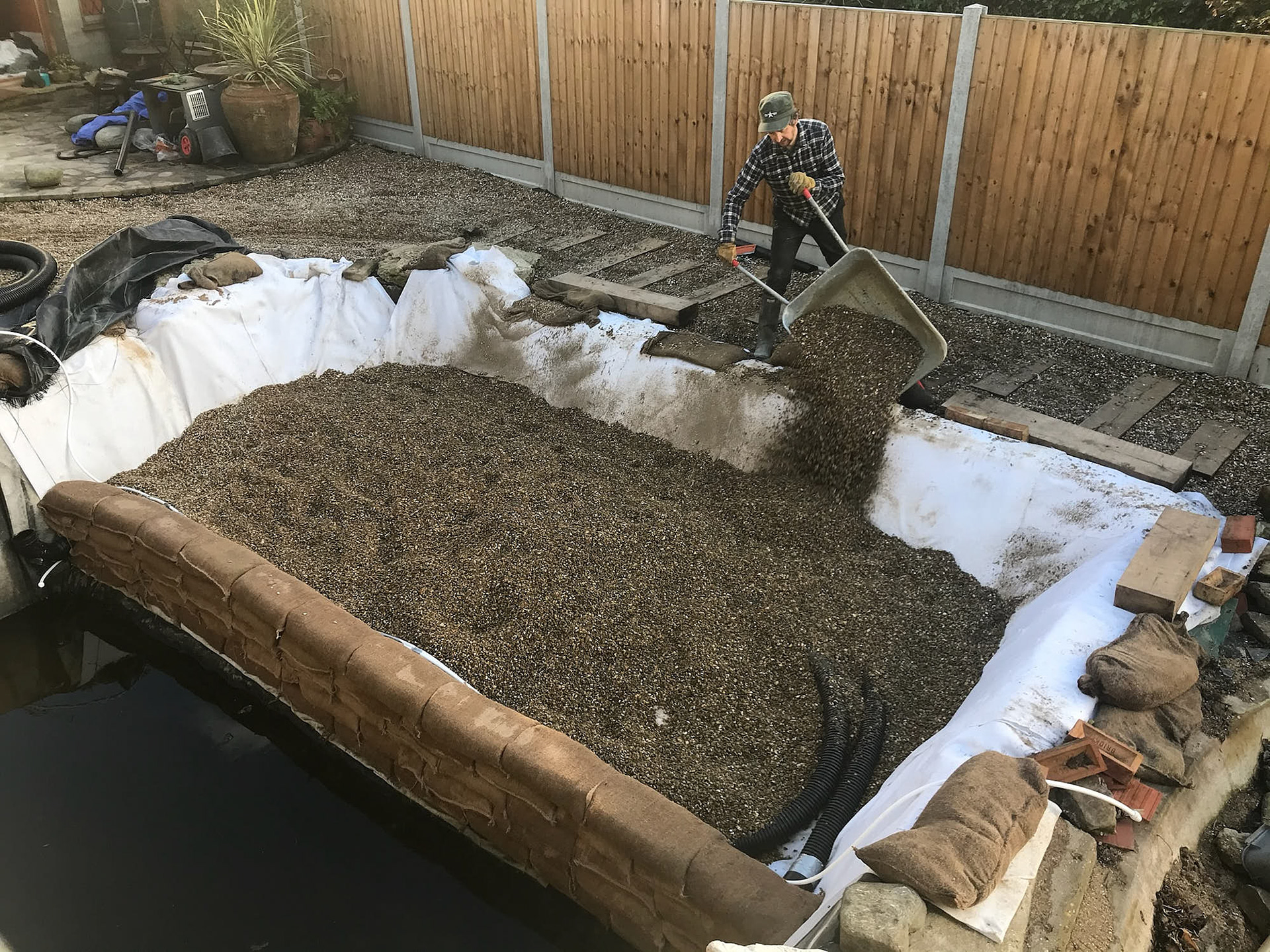
We used 16 bulk bags of gravel throughout the garden (around 15 tonnes in total), all moved by wheelbarrow!
air-Bubble Filtration system
Here's what the air-bubble filtration system looks like. The image on the left shows a simulation of the air stone inside a transparent container, helping to visualise how the system works. The image on the right is an underwater photograph of the bubbles rising to the surface (the air stone itself is hidden inside the pipe).
The two images below are taken from David Pagan-Butler's tutorial and are reproduced here for illustrative purposes.

Photo by David Pagan-Butler

Photo by David Pagan-Butler
The bubbles, being lighter than the surrounding water, rise to the surface through the upper opening of the T-junction. This gentle yet powerful movement creates suction at the bottom of the T-junction, drawing water from the perforated flexible pipes beneath the gravel.
As water leaves the perforated flexible pipes, more water is pulled through the surrounding gravel to replace it, the gravel also working as a filtration bed.
Meanwhile, the water drawn into the T-junction comes into contact with the air stone, where new bubbles are formed. The result is a continuous circulation loop that gently moves large volumes of water through the pond.
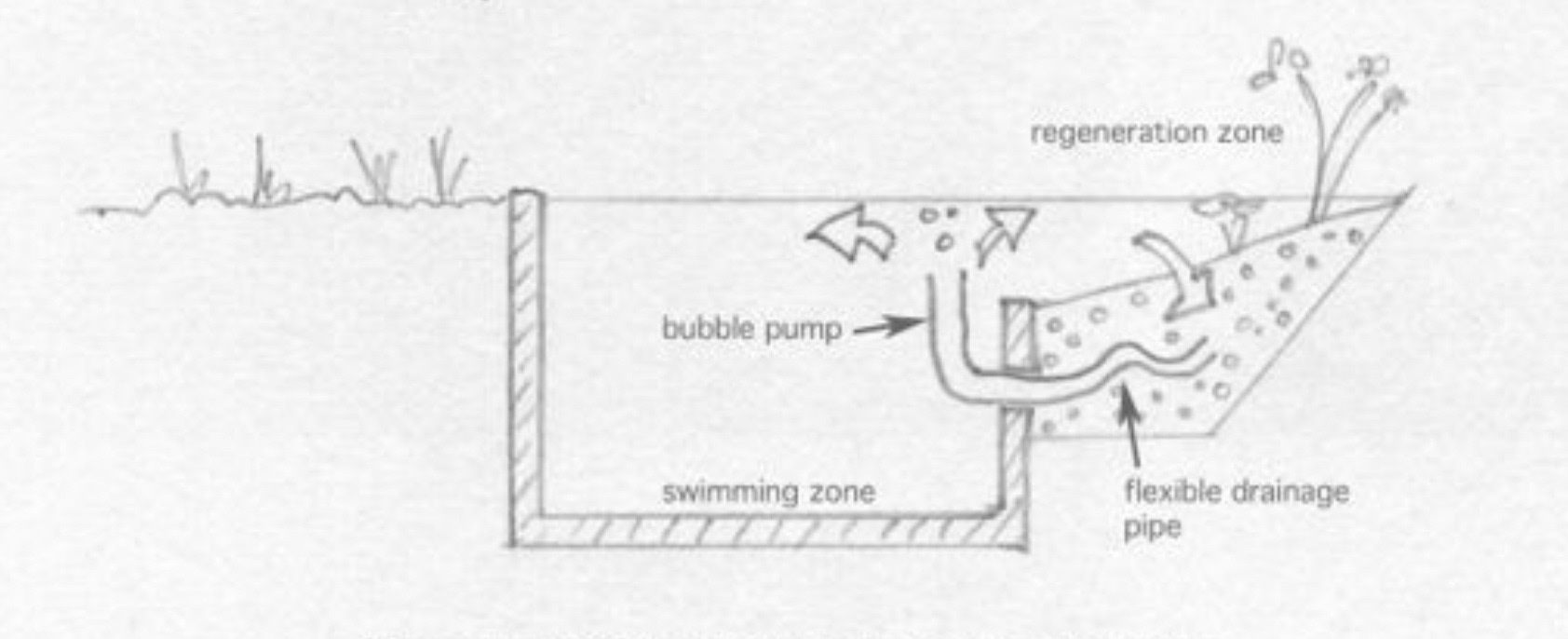
Image by David Pagan-Butler
To make the process easier to visualise, here is the sequence step by step:
Step 1: Bubbles rise through the T-junction towards the water surface.
Step 2: As the bubbles rise, they create suction at the bottom of the T-junction.
Step 3: This suction draws water from the perforated flexible pipes beneath the gravel towards the bottom of the T-junction.
Step 4: As water leaves the perforated pipes, fresh water is pulled through the surrounding gravel to replace it.
Step 5: Meanwhile, the water drawn into the T-junction comes into contact with the air stone, where new bubbles are formed.
Step 6: The bubbles rise to the surface and the cycle begins again.
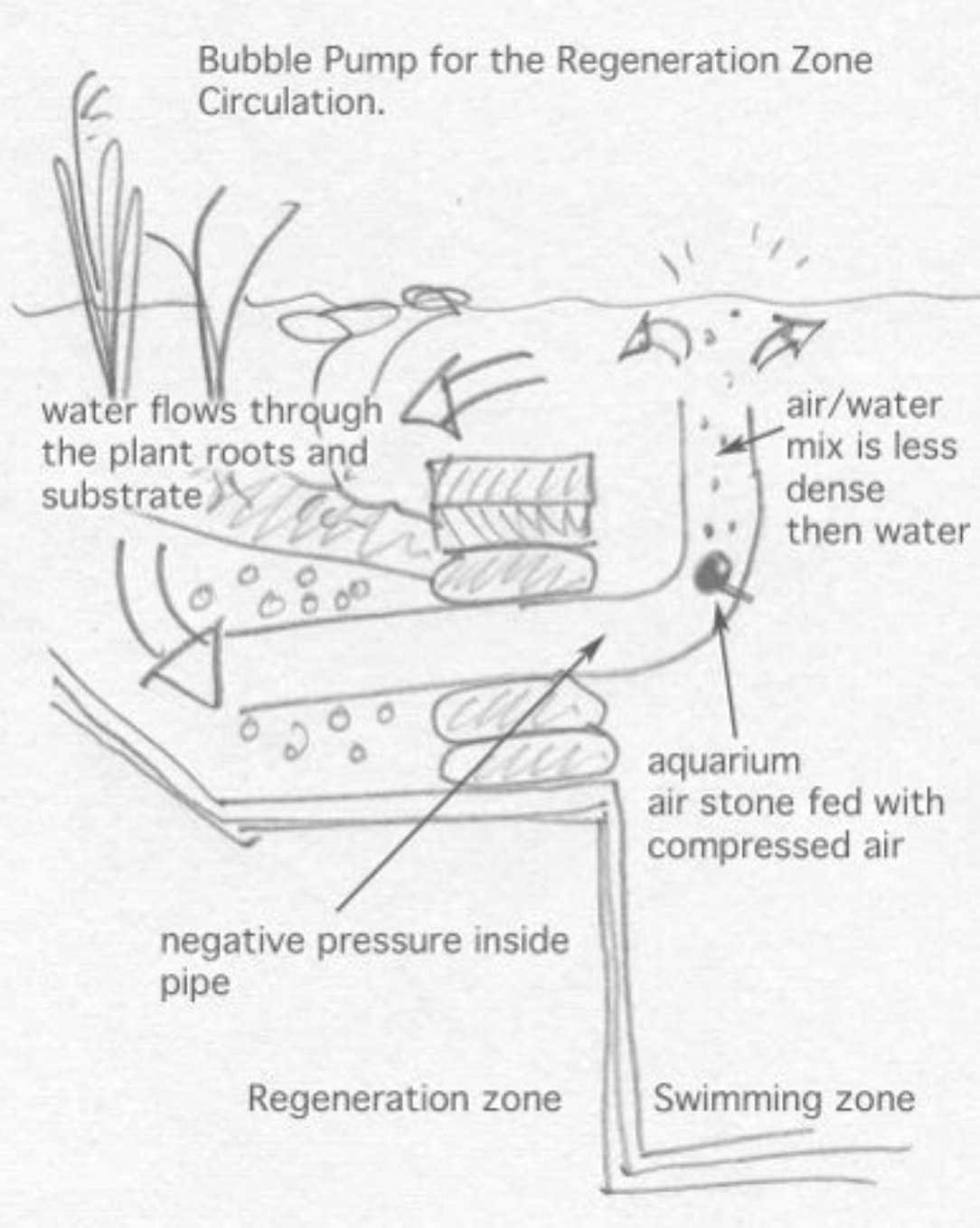
Image by David Pagan-Butler
The secret lies in the bubbles. Rather than forcing water through the pond under high pressure, they gently lift and circulate it, creating a surprisingly effective low-pressure filtration system that uses very little energy while moving large amounts of water between the gravel bed and the deeper areas of the pond.
Where does the pond water come from?
Our pond is filled entirely with rainwater. Hidden pipes beneath the wooden deck collect water not only from our roof but also from the neighbouring houses.
Because we don't top up the pond with tap water, the shallow areas can become a pebble "beach" during particularly dry summers, albeit one softened by plenty of greenery emerging through the gravel.
During wetter periods, a concealed overflow diverts excess water into the mains sewer system. This slows the movement of rainwater through the site and helps reduce surface-water runoff.
our Garden is available for photoshoots and private events.
If you want to know more, drop us a line via the icons below. We'd love to hear from you.